Back-to-School Checklist for Connecticut Parents
Parenting Tips, Back-to-School, Connecticut Families
Back-to-School Checklist: 7 Things Every Connecticut Parent Should Review
As summer winds down in Connecticut, back-to-school season arrives faster than most parents expect. Between supply lists, sports sign-ups, and changing routines, it’s easy to feel overwhelmed. This practical back-to-school checklist focuses on seven key areas every Connecticut parent should review so your child can start the year feeling prepared, safe, and confident.
1. School Calendars, Schedules, and Transportation Plans
The first step in any effective back-to-school plan is understanding the school year’s rhythm. Connecticut districts publish detailed calendars that include start dates, holidays, early dismissal days, and testing windows. Print or download your district’s calendar and add key dates to a family planner or shared digital calendar so everyone knows what’s coming.
Next, review your child’s daily schedule. For middle and high schoolers, walk through their class rotation and talk about when they’ll have lunch, specials, and homework-heavy subjects. For younger children, explain what a typical day will look like, from morning meeting to dismissal. These simple parenting tips help reduce first-day jitters and make transitions smoother for kids of all ages.
Confirm bus numbers, pick-up and drop-off times, and locations using your district’s transportation portal or welcome packet.
If you drive, practice the route and note school traffic patterns and any construction, especially in busy Connecticut towns.
For walkers or bikers, review crosswalks, sidewalks, and safe paths, and remind children about stranger safety and traffic rules.
💡 Pro Tip: Take a “practice run” of the morning routine a few days before school starts so alarms, breakfast, and commute timing feel familiar.
2. Health Forms, Immunizations, and Nurse Communication
Connecticut schools have clear requirements for physical exams and immunizations, especially for kindergarten, 7th grade, and 10th grade entry. Before the first day, check that your child’s annual physical is up to date and that any required forms have been submitted to the school nurse. If your child plays sports, confirm that athletic physicals meet your district’s timeline and that clearance forms are on file with the athletic department.
If your child has allergies, asthma, diabetes, ADHD, or any chronic condition, schedule time to speak with the school nurse. Discuss medications, emergency plans, and any accommodations your child may need. Many Connecticut schools require updated action plans and physician signatures each year, so build this into your back-to-school checklist rather than waiting until an issue arises mid-semester.
Verify that epinephrine auto-injectors, inhalers, or other medications are not expired and are properly labeled for school use.
Complete any food allergy or special diet forms for the cafeteria, especially if your child participates in school meals.
3. Academic Readiness and Learning Supports
Back-to-school success isn’t just about new notebooks; it’s also about feeling ready to learn. Spend a few minutes reviewing last year’s report cards, teacher comments, and any standardized testing summaries your Connecticut district provides. Look for patterns: Was reading a struggle? Did math homework take hours? Were there concerns about organization or focus? These clues help you anticipate what support your child might need this year.
Talk openly with your child about their goals and worries. Simple parenting tips like asking, “What’s one thing you’re excited about?” and “What’s one thing you’re nervous about?” can open meaningful conversations. If your child has an IEP or 504 plan, review it together and make a list of questions to discuss with teachers or case managers at the beginning of the year, not after challenges pile up.
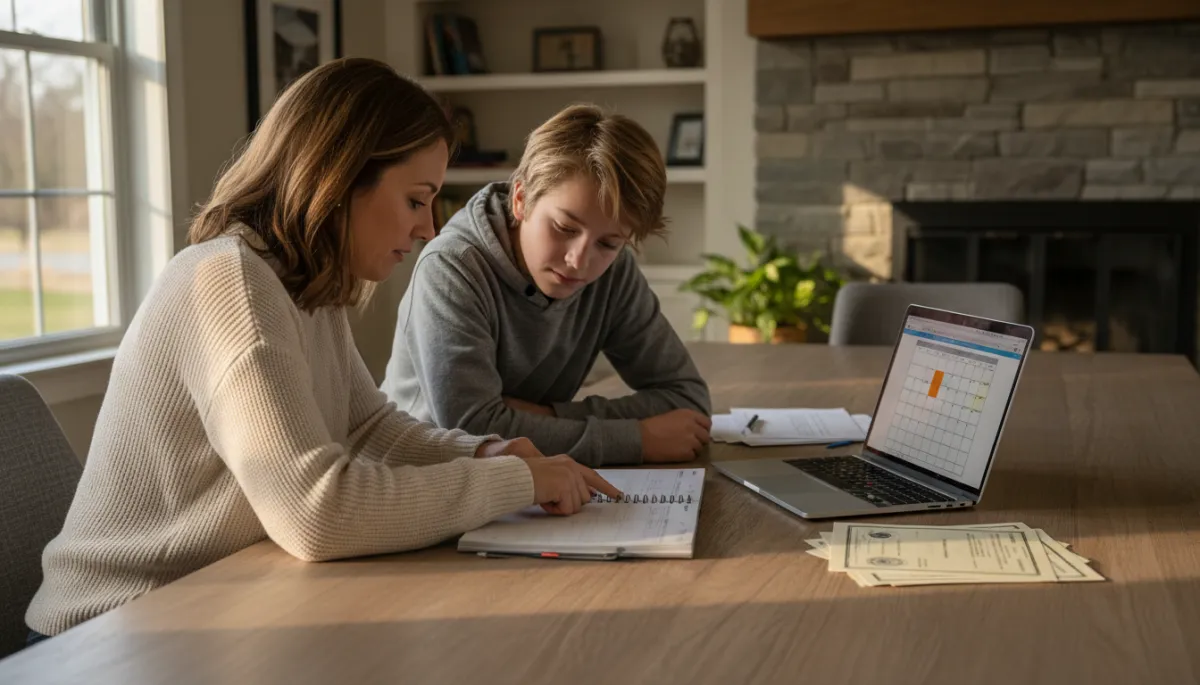
A short planning conversation can ease anxiety and set realistic academic goals.
📌 Key Takeaway: Don’t wait for fall conferences to raise concerns. Email teachers early with a brief snapshot of your child’s strengths, challenges, and what has worked well at home.
4. Daily Routines, Sleep, and Screen Time Boundaries
Long summer evenings and relaxed bedtimes can make the first week of school especially rough. A key back-to-school parenting tip is to gradually shift your child’s sleep schedule 10–15 minutes earlier each night about one to two weeks before school starts. Pediatricians generally recommend 9–12 hours of sleep for school-age children and 8–10 hours for teens, who often face early bus times in many Connecticut districts.
Along with sleep, review your family’s expectations around screens. Decide when phones, tablets, and gaming devices will be put away on school nights, and where they will charge overnight. Many families find that keeping devices out of bedrooms improves both sleep and focus. Write down the agreed-upon rules and post them where everyone can see them to help avoid arguments once homework and activities ramp up.
Create a simple after-school routine: snack, short break, homework, free time, then evening activities and wind-down.
Consider a family “tech curfew” 30–60 minutes before bedtime to support better sleep and calmer mornings.
5. Supplies, Clothing, and Weather-Ready Gear
Connecticut weather can swing from humid heat in September to chilly mornings by October. When you review the school’s supply list, also take stock of clothing, outerwear, and footwear your child has outgrown. Check that they have comfortable layers, rain gear, and sneakers that meet school or gym requirements. Labeling items with your child’s name reduces the chance they end up in the lost-and-found pile by October.
To keep back-to-school shopping manageable, separate “must-haves” from “nice-to-haves.” Start with non-negotiables like notebooks, pencils, a backpack, and any specific items teachers request. Then, if your budget allows, add fun extras like decorative folders or a new lunchbox. Involving your child in choosing a few items can build excitement and ownership over the new school year.
💡 Pro Tip: Many Connecticut communities host backpack drives and supply events. If you need help, reach out to your school counselor, local library, or town services for confidential support.
6. Safety, Contact Information, and Emergency Plans
Another essential part of a Connecticut back-to-school checklist is safety planning. Update the school with current phone numbers, email addresses, and emergency contacts. If your child is allowed to be picked up by certain relatives, neighbors, or after-school caregivers, make sure those names are on file and that everyone understands your family’s pick-up rules and passwords if your school uses them.
Talk with your child about basic safety scenarios in age-appropriate ways: what to do if they miss the bus, who to call if plans change, and how to handle uncomfortable situations with peers. Connecticut schools regularly practice fire, lockdown, and severe weather drills; preparing your child gently ahead of time can make these experiences less frightening when they occur during the school day.
For older students with phones, program key numbers—parents, caregivers, school office—into their contacts and practice using them.
For younger children, teach them their full name, school name, and at least one parent’s name and phone number.
7. Mental Health, Friendships, and Emotional Check-Ins
Finally, no back-to-school checklist is complete without focusing on your child’s emotional well-being. Many Connecticut students are still adjusting after years of disrupted routines and social changes. Ask open-ended questions about friendships, activities, and any worries about bullying or fitting in. Normalize mixed feelings by letting your child know it’s okay to be excited and nervous at the same time.
Review what your child can do if they feel overwhelmed at school: talk to a trusted teacher, visit the counselor, or use calming strategies they’ve practiced at home. If your family has experienced a recent loss, move, or other big change, consider emailing the school counselor or homeroom teacher privately so they can keep a closer eye and offer support. These thoughtful parenting tips help schools partner with you to create a safe, nurturing environment.
📌 Key Takeaway: Regular five-minute check-ins—at bedtime, in the car, or during dinner—often reveal more than one big, serious talk.
Bringing It All Together: A Calm, Confident Start in Connecticut
Back-to-school season will probably never feel completely stress-free, but a clear checklist can make it much more manageable. By reviewing these seven areas—calendars and transportation, health forms, academic readiness, routines, supplies, safety plans, and emotional well-being—you create a strong foundation for your child’s success in the new school year. You also model organization and resilience, powerful life skills that go far beyond the classroom.
As a Connecticut parent, you know each community, school, and child is different. Use this back-to-school checklist as a flexible guide, not a rigid rulebook. Adapt it to your family’s needs, add your own traditions, and involve your child in the planning process. Together, you can turn the rush of August and September into an opportunity to reconnect, reset routines, and step into the school year with clarity and confidence.
Whether your student is starting kindergarten in a small Connecticut town or heading back to a bustling high school, thoughtful preparation makes a real difference. With a bit of planning, some practical parenting tips, and open conversations, your family can greet the first day of school not with panic, but with a deep breath and a sense of readiness for whatever this year brings.
