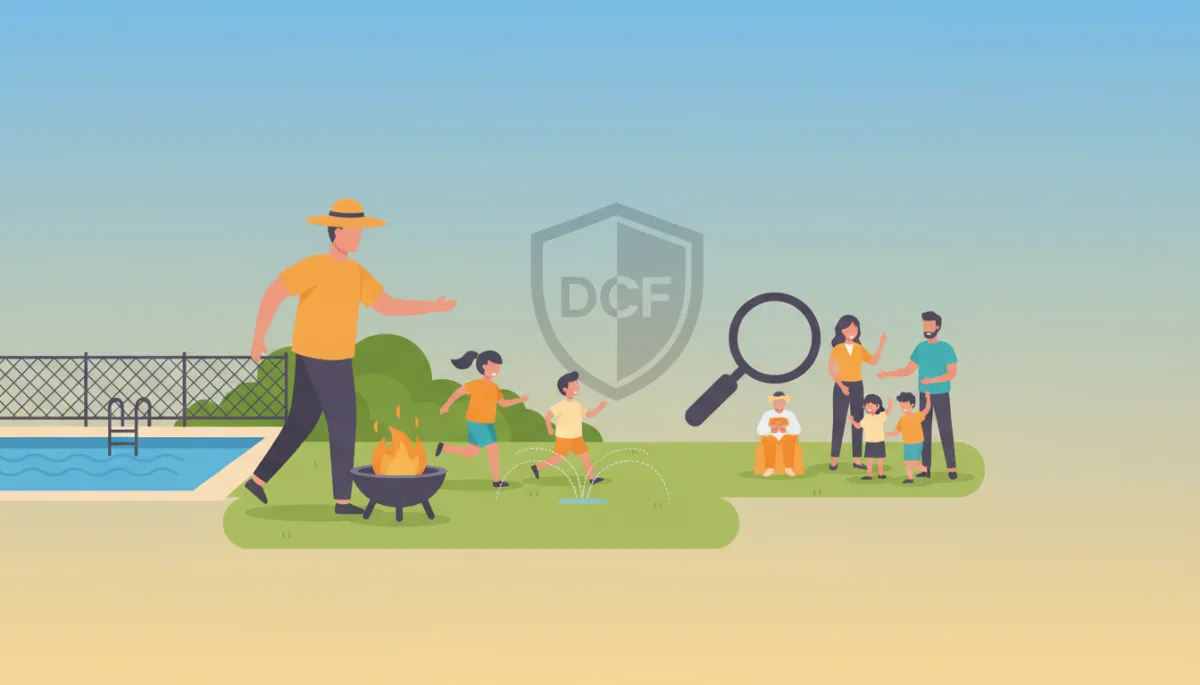
Connecticut Summer Child Safety & DCF Guide
Child Safety, Connecticut DCF, Summer Safety, Family Law
Summer, Child Safety, and DCF: What Connecticut Families Really Need to Know
As a former investigator with the Connecticut Department of Children and Families and now a D.C.F lawyer Connecticut with The Christie Law Firm, I understand how anxious parents can feel when summer arrives. Children are outside more, school routines disappear, and neighbors may see or hear your children at play. Many families quietly worry: “Could this lead to a Connecticut DCF investigation if something goes wrong?”
Many caregivers are surprised to learn that DCF does not open cases just because you own a pool, have a fire pit, or allow your children to play outside. Instead, the agency looks at child safety in context, asking whether a child was exposed to unreasonable or preventable risk. Understanding What DCF considers unsafe during summer can help you enjoy the season with more confidence and less fear.
Introduction: Why This Information Matters for Connecticut Families
At The Christie Law Firm, we work with parents and caregivers across Connecticut who are facing or worried about a Connecticut DCF investigation. Many of these families love their children deeply but feel overwhelmed by the rules, rumors, and mixed messages they hear about child supervision and summer safety. My goal in this article is to provide clear, practical, and reassuring guidance, grounded in my experience on both sides of the system—first as a DCF investigator and now as a defense attorney representing families.
By the end, you should have a better understanding of how the Connecticut Department of Children and Families actually thinks about child safety in the summer months, what situations may raise concern, and what steps you can take to reduce risk while still allowing your children to enjoy the season.
Why Summer Presents Different Risks
Summer is not automatically more “dangerous” than other seasons, but it does present different types of risks for children. From a DCF perspective, three changes stand out: more time outdoors, shifting home routines, and altered supervision arrangements. Understanding these shifts can help you think proactively about child supervision and safety planning.
More time outdoors: Children may spend hours in the yard, at parks, beaches, or friends’ homes. This can mean increased exposure to water, heat, traffic, and unfamiliar adults or older youth. From a DCF lens, the question is not “Were they outside?” but “Was the outdoor environment reasonably safe given the child’s age and abilities?”
Changed routines: Without the structure of school, bedtimes, mealtimes, and daily schedules often shift. Caregivers may be juggling work, childcare, camps, and family responsibilities. When routines change, it can be easier to overlook hazards or assume another adult is watching the child. DCF will consider whether caregivers adapted routines in a way that still protected child safety.
Different supervision arrangements: Older siblings may watch younger ones, neighbors may help, or children may spend more time with relatives or babysitters. DCF does not forbid these arrangements, but they do look at whether the supervising person was capable, attentive, and appropriate for the child’s age and needs.
None of these changes automatically trigger a Connecticut DCF investigation. However, they create situations where poor planning, miscommunication, or lack of supervision could lead to preventable harm. This is where What DCF considers unsafe during summer becomes important to understand.
Common Summer Safety Concerns DCF May Evaluate
Families often ask me if DCF will “come after them” simply because they own certain items or allow certain activities. Based on my experience, DCF does not open cases just because you have a pool, a trampoline, a fire pit, or let your children play outside. Instead, they focus on how these things are used and supervised. Below are some of the more common summer situations that may draw DCF’s attention if something goes wrong.
Pools, Lakes, and Water Access
Water can be a wonderful part of summer, but it is also a leading cause of serious injuries for children. DCF does not investigate simply because a family owns a pool or lives near water. However, if a child is found wandering near an unfenced pool, or a non-swimmer is left alone in deep water, the agency may evaluate whether child supervision was adequate and whether the risk was preventable.
Fire Pits, Grills, and Outdoor Fires
Many Connecticut families enjoy fire pits, grills, and outdoor cooking. DCF does not forbid these activities. Concerns arise when young children have easy access to open flames, hot coals, or lighter fluid without close supervision. Serious burns—especially if combined with evidence of intoxication, distraction, or repeated warnings—may prompt questions about What DCF considers unsafe during summer in your particular situation.
Playgrounds, Trampolines, and Outdoor Play
Children are expected to play, climb, and sometimes fall. DCF does not investigate every playground injury. However, patterns of serious injuries, very young children left alone near busy streets, or dangerous equipment in obvious disrepair can raise concerns. Again, the focus is on whether the risk was reasonable for the child’s age and whether caregivers took basic steps to protect child safety.
Heat, Cars, and Being Left Alone
Summer heat can make certain decisions particularly dangerous—especially leaving a child alone in a vehicle, even “for a minute.” DCF takes these situations very seriously because the risk of harm can rise quickly. Investigators will look closely at the child’s age, how long they were alone, the temperature, and whether there have been similar incidents in the past.

Early legal guidance can help families address safety concerns before they escalate.
How DCF Evaluates Child Safety: The “Totality of the Circumstances”
One of the most important concepts to understand is that the Connecticut Department of Children and Families does not make decisions based on a single detail. Instead, investigators are trained to look at the totality of the circumstances. In other words, they ask: “What was really happening here overall?”
When evaluating What DCF considers unsafe during summer, some of the factors they typically review include:
Child’s age and development: A twelve-year-old and a three-year-old require very different levels of child supervision. What may be acceptable for a responsible teenager could be unsafe for a toddler.
Nature of the hazard: Is the child near deep water, open flames, a busy road, or dangerous tools? Or is the activity more routine, like playing in a fenced yard?
Quality of supervision: Was an attentive adult or mature teen present and able to intervene? Or were caregivers asleep, intoxicated, or physically absent for a long period?
History and patterns: Is this a one-time incident in an otherwise safe and stable home, or part of an ongoing pattern of unsafe situations, neglect, or substance use?
Caregiver’s response: When something went wrong, did the caregiver seek help, cooperate with medical providers, and show insight into what needs to change? Or did they minimize the risk or blame the child?
Understanding this broader view can be reassuring. DCF is not looking for perfection. They are looking for reasonable efforts to protect child safety given the real-world challenges families face—especially in the busy summer months.
Practical Summer Safety Tips to Reduce DCF Concerns
While no list can prevent every accident, there are practical steps you can take to reduce risk and demonstrate responsible child supervision. These same steps often become important if a Connecticut DCF investigation ever occurs, because they show that you were thinking ahead about summer safety.
Secure pools and water areas: Use proper fencing, locked gates, and covers when appropriate. Establish clear rules about when children may be near water and ensure a capable adult is always within arm’s reach of young or non-swimming children.
Supervise fire pits and grills closely: Keep children at a safe distance, store lighter fluid and matches out of reach, and fully extinguish fires before going inside. Explain simple safety rules in age-appropriate language.
Plan for changing routines: If work or camp schedules change, talk through who is responsible for child supervision at each time of day. Do not assume someone else is watching—confirm it.
Set clear rules for outdoor play: For example, children may need to stay within sight of the house, check in every hour, or avoid certain areas like busy streets or unfenced ponds. Adjust rules as children grow and show responsibility.
Never leave young children alone in cars: Even on mild days, temperatures can rise quickly. If you must go inside a store or building, take the child with you, even if it feels inconvenient.
Communicate with babysitters and relatives: Share your safety expectations clearly—about water, fire, outdoor play, and screen time. Make sure they know how to reach you and what to do in an emergency.
💡 Practical Tip: Consider writing down your family’s basic summer safety rules and posting them on the fridge. This can help everyone—children, relatives, and babysitters—stay on the same page and can also show, if needed, that you take child safety seriously.
Perspective From a Former DCF Investigator
When I worked as a DCF investigator, I met many caring parents who were terrified that a single mistake would cost them their children. Now, as a D.C.F lawyer Connecticut, I see that same fear from the other side of the table. I want you to know that most investigators understand that parenting—especially in the summer—is not perfect. What they look for is whether caregivers are willing and able to make changes when a safety concern is identified.
In my experience, families who fare best during a Connecticut DCF investigation often share a few common traits:
They are honest about what happened, even if it is uncomfortable to discuss.
They show insight into what went wrong and can identify specific steps to prevent it from happening again.
They are open to reasonable safety recommendations, such as installing a lock, changing a supervision plan, or attending a parenting or safety class.
At The Christie Law Firm, we help families tell their story clearly and respectfully, highlight the strengths in their parenting, and show the steps they are taking to improve summer safety and overall child safety. My background as a former DCF investigator allows me to anticipate the questions that may come up and prepare you for them in a calm, informed way.
Conclusion: Enjoy Summer While Staying Informed and Prepared
Summer should be a time of connection, play, and memories—not constant fear of a knock at the door. Understanding What DCF considers unsafe during summer can help you strike a healthy balance. The Connecticut Department of Children and Families is not investigating families simply because they own a pool, have a fire pit, or let their children play outside. Instead, the focus is on whether a child was exposed to unreasonable or preventable danger, evaluated under the totality of the circumstances.
By planning ahead, setting clear rules, and staying mindful about child supervision, you can significantly reduce the likelihood that an accident will lead to a formal Connecticut DCF investigation. And if DCF does become involved, knowing your rights and having experienced legal support can make a tremendous difference in both the process and the outcome for your family.
Call to Action: Get Support From a DCF Lawyer in Connecticut
If you have questions about summer safety, child safety, or a current or potential Connecticut DCF investigation, you do not have to navigate this alone. As a former DCF investigator and now a dedicated D.C.F lawyer Connecticut, I understand both the agency’s expectations and the very real challenges families face every day.
The Christie Law Firm is Family Focused & Child Centered™️. Our mission is to protect your rights, support your family, and help you move through DCF and family law matters with clarity and confidence. If you are concerned about how DCF might view your family’s summer routines—or if DCF has already contacted you—reach out for guidance as early as possible.
Contact The Christie Law Firm today by phone or through our website form to schedule a consultation. We will listen to your story, explain your options, and work with you to develop a plan that prioritizes your children’s well-being and your family’s future, not just this summer, but all year long.
