
Understanding DCF Child Interviews in Connecticut
DCF Interview, Child Safety, Parental Rights, Connecticut Family Law
What Happens When DCF Interviews a Child During an Investigation?
As a former Connecticut DCF social worker and supervisor and now a DCF defense attorney, I understand how frightening it can feel to learn that the Department of Children and Families wants to interview your child. My goal in this article is to explain, in clear language, what typically happens during a DCF interview with a child, why these conversations occur, and how Connecticut parents can protect both their children’s emotional well-being and their own parental rights.
1. Why Does DCF Interview Children During an Investigation?
When DCF receives a report of suspected abuse or neglect, Connecticut law requires the agency to decide whether a child is safe and whether services or court involvement are needed. One important tool in that process is speaking directly with the child. An interview gives the social worker a chance to hear the child’s own words about their daily life, relationships, and sense of safety at home, in school, and in the community.
DCF does not rely only on what adults report. Children may experience situations differently than parents, teachers, or neighbors realize. By talking with the child, the worker can:
Clarify what the child understands about the events that led to the report.
Learn about the child’s daily routines, supervision, and basic needs.
Assess whether the child feels safe with caregivers and in the home environment.
It is important to understand that a DCF interview does not mean DCF has already decided that abuse or neglect occurred. It is one piece of information in a larger investigation that also includes caregiver interviews, home visits, school and medical records, and other observations.
2. Where Can DCF Interview a Child?
In Connecticut, DCF may interview a child in several different locations, depending on the circumstances, the child’s age, and any safety concerns. Common settings include:
At school: DCF often speaks with children at school because it is a familiar, neutral place and the child is already separated from caregivers. School staff may serve as a “disinterested adult” when parental consent is waived, as required by Connecticut General Statutes § 17a‑101h and DCF policy.
At home: Sometimes the interview occurs during a home visit. The worker may ask to speak with the child in a separate room or quiet area to allow the child to talk freely without feeling pressured by nearby adults.
At a DCF office or another professional setting: If privacy or safety is a concern, the child may be brought to a DCF office or another agreed-upon location for a more structured conversation.
At a child advocacy center: In cases involving serious physical or sexual abuse allegations, a specialized forensic interview may be conducted at a child advocacy center. These interviews are recorded and follow specific protocols to minimize trauma and preserve accurate information for potential court use.
The choice of location is guided by what is safest and least stressful for the child while still allowing DCF to meet legal timelines and investigative duties.
3. What Questions Might DCF Ask a Child?
Every child and every case is different, so there is no single script. However, DCF workers are trained to use open-ended, developmentally appropriate questions. Typical topics may include:
Who lives in the home and who spends time there regularly.
What a normal school day and weekend look like for the child.
Who helps with meals, homework, bedtime, and supervision.
How the child feels at home, at school, and around different adults in their life.
Questions related to the specific allegation, such as discipline, substance use in the home, or exposure to violence, asked in child-friendly language.
The purpose is not to trick your child, but to understand their experiences. Good practice avoids leading questions and gives the child space to share what they remember in their own words and at their own pace.
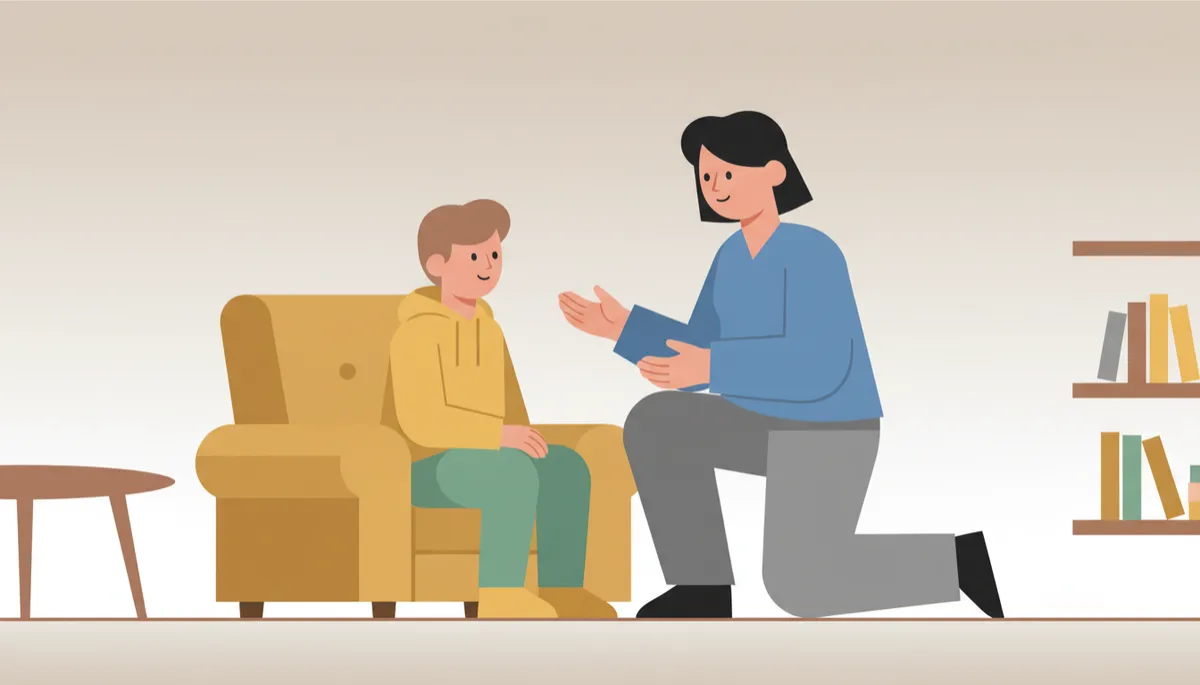
Thoughtful, age-appropriate questions help children share experiences without added pressure.
4. Can DCF Interview a Child Without a Parent Present?
This is one of the most common and understandable concerns I hear from parents. Under Connecticut law and DCF policy, the general rule is that DCF should obtain the consent of a parent, guardian, or caregiver before interviewing a child. However, there are important exceptions.
DCF may interview a child without parental consent when the parent or caregiver is suspected of being the perpetrator of abuse or neglect, or when seeking consent would place the child at imminent risk of physical harm. In those situations, the interview must usually take place in the presence of a disinterested adult—someone who is not involved in the allegations and does not have a personal stake in the outcome—unless immediate access is necessary to protect the child and no such adult can be found after a reasonable effort (see Conn. Gen. Stat. § 17a‑101h and DCF Policy 22‑2).
It is also important to distinguish notification, consent, and presence:
You may or may not be notified before a school-based interview, especially if you are the alleged perpetrator.
Your consent may be required in some situations, but not in others where safety is at issue.
Even when you are notified, you are generally not allowed to sit in on the child’s interview, because your presence could influence what the child says.
💡 Pro Tip: If DCF wants to interview your child, you can respectfully ask whether consent is being requested, who will be present, and where the interview will take place. You also have the right to consult with a DCF defense attorney before making decisions.
5. What Happens During a DCF Child Interview?
In a typical investigative interview, the DCF social worker will begin by introducing themselves and explaining, in simple terms, why they are talking with the child. For example, they might say they are there to make sure children are safe and to understand how things are going at home and school.
The worker should adjust their language to the child’s age and developmental level. With younger children, this may involve very simple questions about who they live with, what happens at bedtime, and whether they feel safe. With teenagers, the conversation may be more detailed and may include questions about mental health, friendships, or substance use in the home.
In more serious cases, particularly where criminal charges are possible, a forensic interview may be conducted by a specially trained professional at a child advocacy center. These interviews are designed to meet legal standards, are often recorded, and are coordinated with law enforcement to avoid multiple, overlapping interviews that can traumatize a child.
Whatever the format, information from the child’s interview is considered alongside other evidence—caregiver statements, medical records, school reports, and home observations—before DCF reaches any conclusions about child safety or potential court involvement.
6. How Should Parents Respond When DCF Wants to Interview Their Child?
Your reaction can strongly influence both your child’s emotional response and the direction of the investigation. While every situation is unique, I generally encourage parents to:
Stay calm and gather information. Ask who will interview your child, where, whether a disinterested adult will be present, and whether your consent is being requested or waived under the statute.
Avoid coaching. Do not tell your child what to say, minimize what happened, or rehearse answers. Coaching can harm your credibility and confuse your child.
Encourage honesty. A simple message such as, “You can tell the truth about how you feel and what you remember,” supports your child without pressuring them to disclose or stay silent.
Do not interfere with the interview. Avoid trying to block the process or discouraging your child from sharing genuine safety concerns. This can backfire and raise more questions for DCF.
Consult a DCF defense attorney. An attorney familiar with Connecticut DCF investigations can help you understand your rights, including when to consent, how to communicate with workers, and how to protect your family’s interests.
7. What Happens After DCF Interviews a Child?
After the interview, the social worker documents what the child shared and evaluates that information with the rest of the investigation. Under Connecticut policy, DCF must complete most investigations within 45 days, and the agency is required to minimize the number of times a child is interviewed to reduce trauma.
The child’s statements alone do not automatically determine the outcome. DCF will also consider:
Information from parents, relatives, and other caregivers.
School and medical records, when appropriate releases are signed or otherwise authorized.
Observations from home visits and collateral contacts, such as teachers or therapists.
Parents are not typically given a verbatim transcript or recording of what the child said. However, you should receive notice of DCF’s findings at the end of the investigation and may have rights to challenge certain decisions. An attorney can help you understand and, when appropriate, appeal those findings.
8. How Can Parents Support Their Child Emotionally?
Even when handled carefully, a DCF interview can be stressful or confusing for a child. You can help by focusing on emotional safety as much as legal strategy. Consider the following steps:
Maintain routines. Keeping regular meals, school attendance, and bedtime schedules can help your child feel secure during an uncertain time.
Offer reassurance, not promises. You might say, “We are doing our best to take care of you,” rather than promising that nothing will change, which may be outside your control.
Listen without pushing. If your child wants to talk about the interview, listen calmly and validate their feelings. Avoid asking repeated, detailed questions that may feel like another interrogation.
Seek professional support when needed. A therapist or counselor experienced with child trauma and DCF involvement can give your child a safe space to process their feelings and can support you as a parent as well.
📌 Key Takeaway: Your child’s emotional well-being is just as important as the legal outcome. A calm, supportive home environment can make a meaningful difference during and after a DCF investigation.
9. When Should Parents Contact a Connecticut DCF Defense Attorney?
You do not have to wait until things “get bad” to seek legal guidance. In fact, early advice often helps families avoid misunderstandings and prevent unnecessary escalation. You may want to contact a Connecticut DCF defense attorney when:
The allegations involve serious physical harm, sexual abuse, or significant neglect concerns.
You are unsure whether to consent to a child interview, or you have questions about your ability to be notified or present.
Law enforcement is involved, or there is a possibility of criminal charges as well as DCF findings.
You are worried about possible court proceedings, removal of your child, or restrictive safety plans.
You disagree with how the interview is being handled or feel that your parental rights are not being respected.
At The Christie Law Firm, LLC in Hartford, we combine knowledge of DCF policy, Connecticut child welfare law, and real-world experience inside the agency to help parents navigate these difficult moments with clarity and confidence.
Frequently Asked Questions About DCF Child Interviews in Connecticut
Will I automatically lose my children because DCF interviewed them?
In most cases, no. Many investigations end without court involvement or removal. The interview is one part of DCF’s effort to understand what is happening and whether services or supports are needed.
Can I get a copy of what my child said?
Parents do not usually receive a verbatim transcript or recording. However, you will receive notice of DCF’s findings and may be able to review portions of the record in certain contexts, especially if court proceedings occur. An attorney can help you request and interpret this information.
Can I have my own attorney present at my child’s interview?
You have the right to speak with an attorney about whether to consent to the interview and about your own participation in the process. Whether your attorney may be physically present during the child’s interview can depend on the setting, the type of investigation, and safety concerns. This is an important issue to discuss with a lawyer who understands DCF practice.
Understanding the Interview Process Helps Parents Protect Their Children's Well-Being.
DCF child interviews are designed to gather information about child safety, not to punish loving parents who may be facing misunderstandings, stress, or difficult circumstances. When you understand why DCF talks with children, what types of questions may be asked, and how Connecticut law balances child safety with parental rights, you are better equipped to respond calmly and thoughtfully.
As a firm that is Family Focused and Child Centered™, The Christie Law Firm, LLC is committed to helping parents protect both their children’s emotional health and their legal interests. If DCF wants to interview your child and you have questions about your parental rights or the investigation process, The Christie Law Firm, LLC can help you understand your legal options and make informed decisions for your family.
Disclaimer: This article is for general educational purposes only and is based on Connecticut law and DCF policies as of 2026. It is not individualized legal advice and does not create an attorney-client relationship. Every case is different. If you are involved in a DCF investigation, you should consult directly with a qualified Connecticut attorney about your specific situation.
