DCF Family Assessment vs. Investigation Explained
Connecticut DCF, Family Assessment Response, DCF Investigation, Parents’ Rights
DCF Family Assessment vs. Investigation: What’s the Difference?
If the Connecticut Department of Children and Families (DCF) has contacted you, one of the first questions you may have is whether your case is being handled as a Family Assessment Response (FAR) or a formal investigation. Understanding the difference can ease some anxiety and help you make informed decisions to protect your family and your rights.
What Is a Family Assessment Response (FAR)?
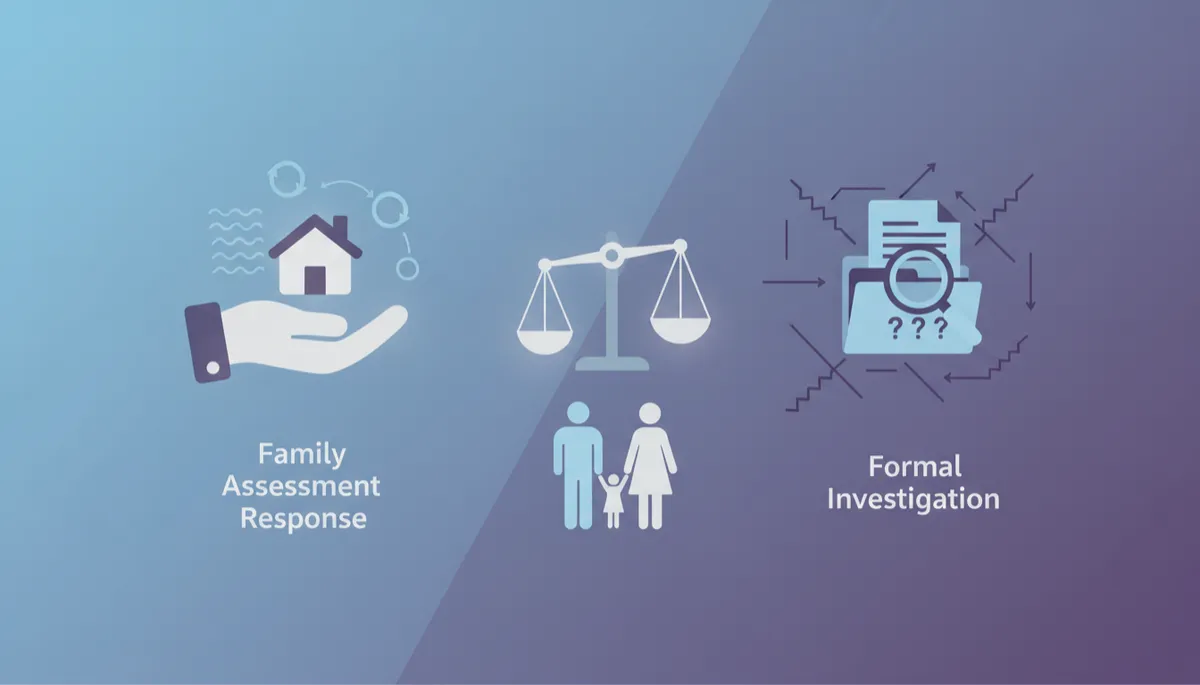
Connecticut uses a “differential response” system for child protection. Instead of treating every accepted report the same way, DCF chooses between two tracks: a traditional investigation or a Family Assessment Response (FAR). FAR is designed for lower-risk situations where there are concerns about a child’s well-being, but no immediate evidence of serious abuse, severe neglect, or imminent danger.
Under DCF’s policy manual (Volume 1, Chapter 22‑2‑1), a FAR focuses on assessing family needs, strengths, and safety rather than proving or disproving an allegation. The social worker will still complete safety and risk assessments, look at your family’s history with DCF, and consider background checks, but the tone is meant to be more supportive and collaborative than accusatory.
A FAR is also generally voluntary. DCF may offer referrals to community-based services, such as Community Support for Families (CSF), parenting support programs, or counseling. These services are intended to help you address stressors like housing instability, mental health, substance use, or parenting challenges before they rise to the level of serious safety threats. DCF must reach a decision on a FAR case within about 45 days of intake, similar to investigations, but there is no formal finding of abuse or neglect at the end of a FAR track.
💡 Key Point: FAR is still DCF involvement. It is “softer” than an investigation, but the agency is still evaluating child safety and can change course if new concerns arise.
What Is a Formal DCF Investigation?
A formal DCF investigation is used for higher-risk reports of suspected abuse or neglect. This may include allegations of serious physical harm, sexual abuse, severe neglect, or situations where a child may be in imminent danger. Once a report is accepted, DCF screens it and assigns a risk level. For high-risk cases, the investigation must begin quickly—within as little as two hours for imminent risk, and within 24–72 hours for moderate or lower risk concerns, according to DCF guidance and state law.
During a formal investigation, DCF will typically:
Visit your home and observe the children and the living conditions.
Interview parents, caregivers, and, when appropriate, the child and siblings.
Contact “collaterals” such as schools, doctors, therapists, or law enforcement to gather additional information.
Review prior DCF involvement, criminal history, and any patterns of concern.
By law, DCF must reach a conclusion within 45 calendar days. At the end of the investigation, the agency decides whether the allegations are substantiated (DCF believes abuse or neglect occurred) or unsubstantiated (DCF does not find enough evidence). In substantiated cases, DCF may keep the case open for ongoing services, seek court orders, or, in extreme situations, move to remove a child or place a person on the Child Abuse and Neglect Registry.

How you communicate and document interactions during DCF contact can shape the outcome of your case.
FAR vs. Investigation: Key Differences
While both tracks focus on child safety, they feel very different to families. The table below summarizes some of the most important distinctions:
Area | Family Assessment Response (FAR) | Formal Investigation |
|---|---|---|
Purpose & Approach | Assess needs and safety; collaborative, supportive, strength-based. | Determine whether abuse/neglect occurred; fact-finding and risk-focused. |
How Cases Are Assigned | Lower-risk reports; no immediate danger or serious allegations. | Higher-risk reports; serious injury, sexual abuse, severe neglect, or prior history. |
Family Contact & Information Gathering | Home visits, interviews, and assessments, but with less adversarial tone. | Home visits, detailed interviews, collateral contacts, and possible law enforcement involvement. |
Possible Findings & Outcomes | No formal substantiation; case may close or move to services or investigation. | Allegations substantiated or unsubstantiated; may involve registry, court, or removal. |
Services & Follow-Up | Voluntary referrals to community programs like CSF, parenting support, counseling. | Ongoing DCF supervision, Integrated Family Care and Support, court-ordered services, or foster care. |
Can a FAR Turn Into a Formal Investigation?
Yes. One of the most important things for parents to understand is that a FAR track can change. If, during the assessment, DCF identifies new safety concerns or receives additional allegations that suggest higher risk, the agency can transfer the case from FAR to a formal investigation. Supervisors must review these decisions, and documentation is required, but the shift can happen quickly if the safety picture changes.
Examples of when a FAR might convert to an investigation include:
New information about physical injuries, sexual abuse, or severe neglect comes to light.
DCF learns of repeated prior reports or escalating domestic violence in the home.
A child discloses more serious harm than what was originally reported.
📌 Key Takeaway: Even in a FAR, DCF retains its full legal authority. Cooperation should be balanced with protecting your rights, and legal advice can help you navigate that balance.
Does FAR Mean Your Family Is Not at Risk of Further DCF Involvement?
A FAR often feels less threatening than an investigation, and many families assume that if their case is assigned to FAR, they are “in the clear.” That is not always true. FAR cases can result in:
Case closure with no further DCF involvement, if safety concerns are resolved.
Referrals to community services that continue after the FAR ends, often through partner agencies.
Transfer to ongoing DCF services if the agency believes continued monitoring is needed.
Conversion to a formal investigation if new or more serious issues emerge.
In other words, FAR does not guarantee that DCF will leave your family alone in the future. It simply means that, based on the information DCF has now, the agency believes a supportive assessment approach is appropriate. You should still take the process seriously, understand what is being asked of you, and consider speaking with a Connecticut DCF attorney if you have questions or feel uncomfortable with any requests.
What Rights Do Parents Have During Either Process?
Whether your case is a FAR or a formal investigation, your legal rights as a parent or guardian remain the same. Under Connecticut law (see Conn. Gen. Stat. Chapter 319a), DCF must provide you with a written notice—often called the “Parents’ Right to Know” notice—early in the process, explaining your rights in plain language. These include:
You are not required to let DCF enter your home, unless they have a court order or emergency authority.
You are not required to speak with DCF immediately, and you may choose to wait until you have consulted an attorney.
You have the right to hire an attorney and have that attorney present for meetings and interviews.
You are not obligated to sign releases or other documents without reviewing them and, if you wish, discussing them with counsel.
Anything you or your child says to DCF may be used in court if a case is filed later.
⚠️ Warning: Refusing all communication can backfire. If DCF believes a child is unsafe and you will not engage, the agency may seek court orders or even emergency removal. The safest approach is usually to be respectful, ask questions, and get legal advice early.
In addition to these core rights, it is wise to:
Ask for clarification whenever you do not understand a request or form.
Keep your own notes of dates, conversations, and promises made by DCF workers or service providers.
Request copies of written plans, safety agreements, and referrals.
What Happens When FAR or an Investigation Ends?
At the end of the 45‑day period, DCF must make a decision about your case, whether it started as FAR or an investigation. Possible outcomes include:
Case closure. DCF may decide your children are safe and no further involvement is needed. This can happen after both FAR and unsubstantiated investigations.
Referral to community resources. Many FAR cases end with a warm handoff to community agencies, such as Community Support for Families, parenting programs, or counseling services that continue working with you voluntarily after DCF steps back.
Ongoing DCF services. If concerns remain, DCF may open a case for ongoing supervision. Families may receive services through Integrated Family Care and Support or other programs, often with specific goals and timelines.
Court involvement or removal. In substantiated, higher-risk investigations, DCF may file a neglect petition, seek an Order of Temporary Custody, or pursue other court orders. These situations are serious and require immediate legal representation.
Understanding where your case stands—and what DCF is considering as a next step—can help you plan and protect your family. Do not hesitate to ask the worker directly: “Is my case being handled as FAR or an investigation, and what are the possible outcomes you are considering?”
How The Christie Law Firm, LLC Can Help
Whether you are facing a Family Assessment Response or a formal investigation, DCF involvement is stressful and can have long-lasting consequences for your family. An experienced Connecticut DCF attorney can explain what each step means, help you respond to requests, protect your rights, and advocate for the safest, least intrusive outcome possible. If DCF has contacted you, it is wise to seek legal guidance before signing documents or agreeing to any plan that you do not fully understand.
The Christie Law Firm, LLC works with parents across Connecticut who are navigating FAR cases and investigations. If you have questions about your specific situation, consider reaching out for a confidential consultation so you can move forward with clarity and a plan.
