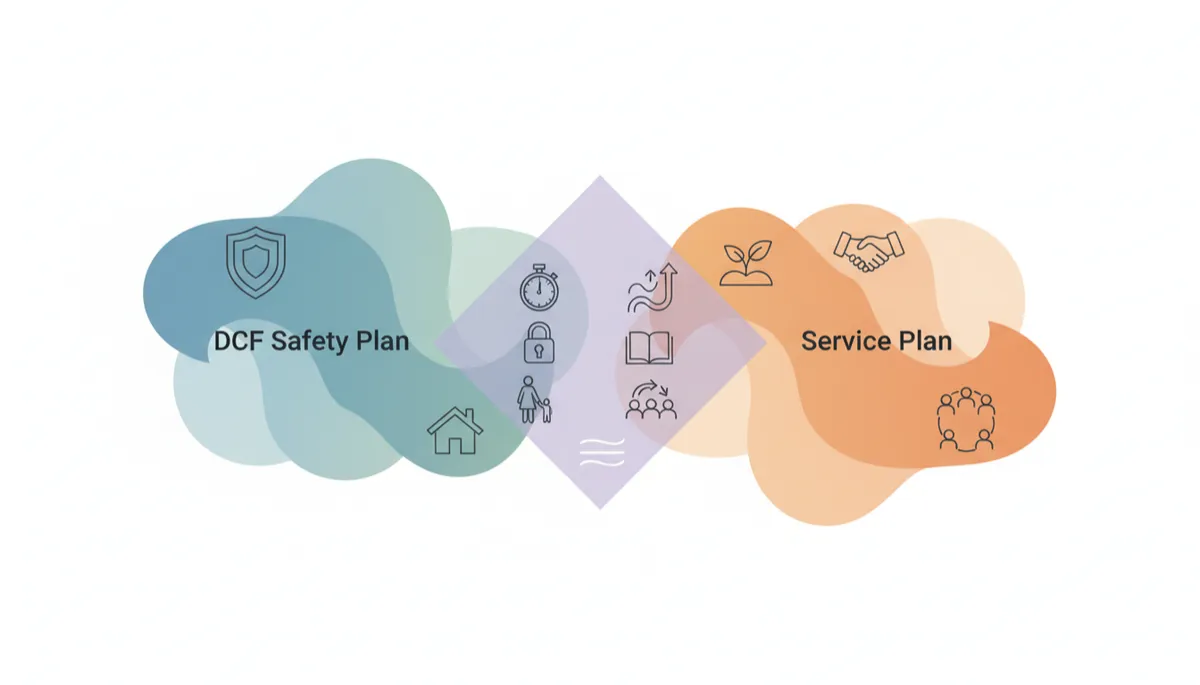
Understanding DCF Safety and Service Plans
Connecticut DCF, DCF Safety Plans, Service Plans, Child Protection
DCF Safety Plans vs. Service Plans: What’s the Difference?
As a former Connecticut DCF investigator and now a DCF defense attorney, I know that one of the first confusing moments for many parents is when a worker mentions a “safety plan” or a “service plan.” Both sound similar, both can feel urgent, and both may affect your family in important ways. Yet they serve different purposes within Connecticut DCF practice. Understanding that difference can help you respond calmly, protect your rights, and keep the focus where it belongs—on your children’s safety and well-being.
What Is a DCF Safety Plan?
A DCF Safety Plan is a short-term agreement designed to address immediate child safety concerns. Under Connecticut’s current ABCD Child Safety Practice Model, DCF is expected to identify specific safety threats and outline concrete steps to keep a child safe without automatically removing the child from the home whenever possible. A safety plan is one of the tools the agency uses to do that.
A safety plan usually comes up during an investigation or Family Assessment Response after a report of suspected abuse or neglect. The worker may say, “We’d like to put a safety plan in place.” That typically means DCF believes there is a present safety risk that needs to be controlled right away while they continue to assess the situation. The written plan should clearly state:
What specific concern DCF is trying to address (for example, unsupervised contact with a certain adult, active substance use, or domestic violence in the home).
What actions will be taken to protect the child right now.
Who is responsible for each action and how long the plan will last before it is reviewed.
Safety plans can include many different arrangements, such as:
A trusted relative temporarily living in the home to supervise contact with the children.
One parent agreeing not to have unsupervised contact until certain conditions are met (for example, completing an evaluation).
Children staying temporarily with a relative or close family friend while the home situation is stabilized.
Specific household safety steps, such as securing medications, locking firearms, or putting safety gates in place for young children.
Although safety plans are often described as “voluntary,” they are taken seriously by DCF. Not following a signed safety plan can lead to DCF seeking court involvement more quickly. For that reason, parents should understand every part of the plan, ask questions, and consider speaking with an attorney before signing when possible.
What Is a DCF Service Plan?
A DCF Service Plan is different. Instead of focusing only on immediate danger, a service plan looks at the ongoing needs of the family. Connecticut DCF’s current Child & Family Services Plan emphasizes partnering with families, building on strengths, and connecting them to community supports. A service plan is one way DCF organizes those efforts when a case remains open beyond the initial investigation stage.
A service plan typically identifies:
The concerns DCF believes are affecting your children’s safety or well-being over time (for example, ongoing substance use, untreated mental health needs, chronic conflict between caregivers, or unstable housing).
Your family’s strengths and supports, such as relatives, community connections, or services you are already using successfully.
Goals or outcomes DCF wants to see, like consistent school attendance, sobriety, safe parenting practices, or improved communication between caregivers.
Specific services or steps that may help you reach those goals, such as parenting education, counseling, domestic violence services, or substance use treatment.
Service plans usually involve longer-term work. DCF will often schedule regular meetings or case reviews to look at progress, update goals, and decide whether the case can be closed or whether further action is needed. In some situations, service plans are developed in the context of a court case, and court orders may require participation in certain services. In others, services may be recommended as part of an in-home case without a court order. It is important to ask which applies in your situation, because that affects your legal obligations and options.

Clear, written plans help families understand expectations and track their progress over time.
Safety Plan vs. Service Plan: Key Differences
Topic | DCF Safety Plan | DCF Service Plan |
|---|---|---|
Primary purpose | Control immediate safety threats and keep children safe right now. | Address ongoing needs, build family strengths, and support long-term change. |
Types of concerns | Present danger, such as unsafe supervision, active violence, or crisis conditions. | Underlying issues like substance use, mental health, parenting skills, or instability. |
Common requirements | Supervision rules, temporary caregivers, no-contact conditions, home safety steps. | Participation in services, attending appointments, following treatment or parenting recommendations. |
Duration and review | Short-term; tied to a specific review date or until danger is controlled. | Longer-term; reviewed regularly as part of ongoing case management or court reviews. |
Parent and caregiver involvement | DCF should discuss options, but decisions may feel urgent due to safety concerns. | Often developed in team meetings with more time for discussion and planning. |
Consequences of not following the plan | DCF may view non-compliance as increased risk and seek court involvement more quickly. | May affect how DCF or the court views progress and future decisions about the case. |
These are general differences. The exact terms, duration, and legal impact of any plan will depend on your family’s circumstances, the type of DCF involvement, and whether there is an active court case. That is why it is so important to read each document carefully and ask how it applies in your situation.
Can a Family Have Both a Safety Plan and a Service Plan?
Yes. In fact, it is common for families working with Connecticut DCF to encounter both. For example, DCF might:
Put a safety plan in place to address immediate concerns—such as requiring supervised contact between a parent and child—and
Develop a service plan that includes parenting education, counseling, or treatment to address the issues that led to those concerns in the first place.
Understanding that these are two different tools can help you stay organized. The safety plan answers, “What are we doing today to keep the children safe?” The service plan answers, “What are we doing over the next few months to strengthen this family so that these concerns do not continue?”
What Should Parents Ask Before Agreeing to Either Plan?
When DCF presents a safety plan or service plan, you are allowed—and encouraged—to ask questions. Consider asking:
What specific concerns is this plan intended to address? Ask the worker to describe the safety threats or ongoing issues in clear, concrete terms, not just general labels like “neglect” or “risk.”
What am I being asked to do? Go through each requirement and make sure you understand what is expected, how often, and for how long.
Is this a DCF request, an agreement, or a court-ordered requirement? Some plans are informal recommendations, some are written agreements, and others are tied directly to court orders. The difference matters for your legal rights and obligations.
How will my progress or compliance be evaluated? Ask what DCF will look for to decide whether you are meeting the plan and when the plan can be changed or ended.
When will the plan be reviewed? Safety plans should have a clear review date. Service plans are usually reviewed at regular intervals or court dates. Ask for those dates in writing if possible.
What happens if I disagree or cannot meet a requirement? If a condition is unrealistic—for example, attending a program that conflicts with work or transportation—raise that concern and ask about alternatives. It is better to discuss this upfront than to sign something you cannot follow.
💡 Practical Tip: You are allowed to ask for time to review the plan, to consult with an attorney, or to have a support person present when the plan is discussed, especially when the plan could affect custody, housing, or other major family decisions.
What Happens If Parents Disagree With a Plan?
It is not unusual for parents to feel that a proposed safety plan or service plan is too strict, not realistic, or based on information they believe is inaccurate. If that happens, it is important to respond thoughtfully rather than out of fear or frustration. Start by asking for clarification: “Can you explain why this specific condition is being requested?” or “What information led to this requirement?”
In some situations, you may be able to negotiate changes that still address DCF’s concerns but work better for your family. For example, if DCF wants a relative to move in as a safety monitor but that person cannot do so, you might suggest a different relative who can provide supervision at key times. If a particular provider is not a good fit, you can ask about other approved options. The goal is to find a plan that keeps children safe while respecting your family’s realities as much as possible.
At the same time, it is important to recognize that declining a plan or not following it can have consequences, especially if DCF believes there is serious ongoing risk. Not every DCF request is legally mandatory, but some are closely connected to how the agency and the court will view your ability to protect your children. When a plan may affect custody, caregiving arrangements, housing, or other major decisions, it is wise to seek individualized legal guidance so you understand your options before agreeing, declining, or asking for changes.
Why Documentation and Communication Matter
Whether you are dealing with a DCF safety plan, a service plan, or both, organized records can make a real difference. Keep copies of every written plan you are asked to sign. If you receive a revised version, keep the old one and the new one so you can see what changed and when. Store them in a folder or digital file that you can access easily when you have meetings, court dates, or conversations with your attorney.
It is also helpful to document your communications with DCF and service providers. This might include:
Writing down the date and time of phone calls and what was discussed.
Saving important emails or text messages about appointments, progress, or changes to the plan.
Keeping attendance slips, certificates, or letters from service providers showing that you attended sessions or completed programs.
Clear documentation can help you show that you have followed through on what was asked, raise questions when something is unclear, and work more effectively with your attorney. It also helps you keep track of your own progress and advocate for appropriate changes when you have met certain goals and are ready for the plan to be reduced or ended.
Understand the Plan Before You Agree
Both DCF safety plans and service plans are meant to protect children and support families, but they do so in different ways. A safety plan focuses on immediate protection; a service plan focuses on longer-term change and support. For Connecticut parents, especially those already under stress, the paperwork and terminology can feel overwhelming. Taking the time to understand which type of plan you are being offered, what it requires, and how it may affect your rights is a powerful step toward protecting your family and staying engaged in the process.
At The Christie Law Firm, LLC, our Family Focused and Child Centered™ approach is built on the belief that informed parents are better able to advocate for their children. If you are facing a Connecticut DCF safety plan, service plan, or both, you do not have to navigate it alone. Ask questions, keep documentation, and consider seeking legal guidance so you fully understand your options before you sign or agree to any conditions that affect your family’s daily life.
To discuss your specific situation and get individualized guidance about DCF Safety Plans, Service Plans, and your parental rights in Connecticut, you are invited to contact The Christie Law Firm, LLC. An experienced DCF defense attorney can help you review proposed plans, clarify what is required, and develop a strategy that keeps your children’s safety and your family’s stability at the center of every decision.
Disclaimer: This blog is for general educational purposes only. It is not legal advice and does not create an attorney-client relationship. Every family’s situation is different, and Connecticut DCF policies and laws may change. You should consult directly with an attorney about your specific circumstances before making decisions about any DCF safety plan, service plan, or court-related matter.
