
Family Focused & Child Centered™️

Dads' Stories & Men's Mental Health Awareness
Father's Day, Men's Mental Health, Dads' Stories
Tell It Thursday: Dads Don’t Get Talked About Enough
Father’s Day often passes in a blur of cards, cookouts, and quick social media posts. But behind the “#1 Dad” mugs are real men with complex emotions, private battles, and stories that rarely get told. This Tell It Thursday, we’re slowing down to listen—to the quiet resilience, the hidden struggles, and the powerful truth that men’s mental health and dads’ stories deserve far more space than they usually get.
Beyond the Barbecue: What Father’s Day Often Misses
Father’s Day is meant to celebrate dads, stepdads, grandfathers, and father-figures. We buy gifts, share funny memes, and post old photos with short captions like “Thanks, Dad.” On the surface, it looks like appreciation. Yet many fathers quietly report feeling unseen on a day that is supposedly about them. The focus often lands on what they do— provide, protect, fix—rather than who they are or what they might be carrying inside.
For some, Father’s Day is complicated. There are dads who are separated from their children, grieving a loss, or navigating blended families and co‑parenting. There are men who never had a present father themselves and are trying to build a blueprint they never received. There are those battling anxiety, depression, or burnout while still showing up for school runs, late‑night feedings, and endless to‑do lists. These realities rarely make it onto greeting cards, but they are part of the story of modern fatherhood—and they matter deeply to men’s mental health.
The Silent Weight Many Dads Carry
Culturally, we still send a powerful message to men: be strong, be steady, don’t complain. Fathers are often expected to be the emotional anchor, regardless of what’s happening inside. That pressure can be heavy. When dads feel they must always be “the rock,” they may struggle to admit when they feel lost, overwhelmed, or scared. The result is a quiet isolation that can slowly chip away at well‑being, relationships, and self‑worth.
Men’s mental health statistics tell a sobering story: men are less likely to seek professional help, more likely to minimize emotional pain, and in many countries, more likely to die by suicide. Yet behind every number is a human being—a dad who might be juggling financial stress, work pressure, health issues, and family responsibilities while trying not to “be a burden.” When we say, “Dads don’t get talked about enough,” we’re really saying their inner lives don’t get talked about enough, especially on days like Father’s Day that could be natural openings for honest conversation.
📌 Key Takeaway: Many fathers feel they must stay emotionally silent to be “strong,” but that silence can harm men’s mental health and family connection.
Why Dads’ Stories Matter—for Them and for Us
Stories are how we make sense of who we are. When dads share their experiences—their fears, failures, small wins, and quiet joys—they’re not just talking about themselves. They’re helping partners understand them, helping kids see them as full, feeling people, and helping other men realize they aren’t alone. Dads’ stories can normalize vulnerability, especially around men’s mental health, and that can be life‑changing.
Think about the dad who admits he felt terrified bringing his newborn home from the hospital. Or the father who shares how lonely it was to be a stay‑at‑home parent in a world that still assumes childcare is “women’s work.” Or the man who talks openly about going to therapy after realizing his anger was really unspoken grief. These dads’ stories don’t weaken the idea of fatherhood—they deepen it. They show that strength and softness can coexist, that asking for help is a form of courage, and that emotional honesty is a powerful gift to the next generation.
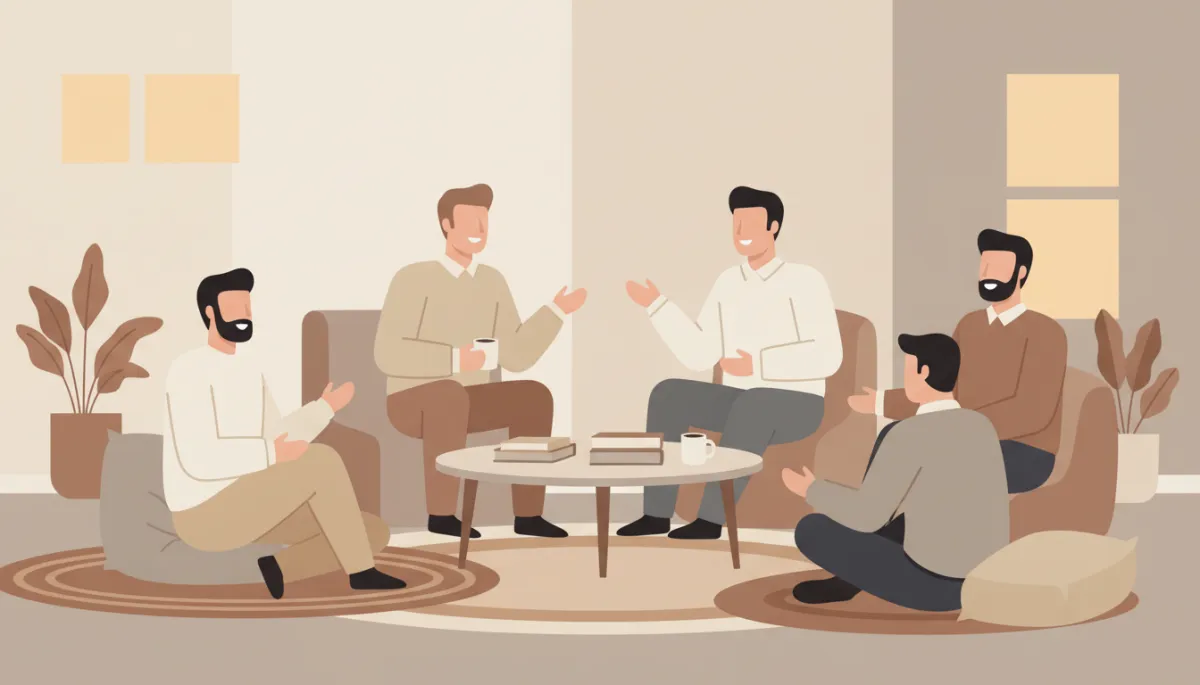
When dads speak honestly, they create a ripple of permission for others to open up.
Tell It Thursday: Creating Space for Fathers to Be Heard
Tell It Thursday is about making intentional room for real conversation. It’s an invitation to slow down, ask deeper questions, and listen without rushing to fix or judge. When we apply that spirit to Father’s Day and beyond, we begin to shift the culture around fatherhood and men’s mental health. Instead of assuming we know how the dads in our lives feel, we can ask—and then genuinely listen to the answers.
That might look like starting a new tradition: a Father’s Day walk where phones stay in pockets and the conversation goes a little deeper. It could be a weekly “Tell It Thursday” check‑in with a partner or friend, where the only goal is to share how you’re really doing. It might mean joining a dads’ group, a men’s circle, or an online community focused on dads’ stories and emotional well‑being. The format matters less than the intention: to treat fathers as full humans whose inner lives deserve attention, not as background characters whose job is simply to keep everything running.
💡 Pro Tip: Swap “How’s work?” for “How are you coping with everything lately?” and then let the silence stretch long enough for a real answer.
Practical Ways to Support Men’s Mental Health This Father’s Day
Honoring Father’s Day doesn’t have to mean grand gestures. Some of the most meaningful support for men’s mental health shows up in simple, consistent actions. Here are a few ways to turn appreciation into something deeper and more sustaining for the dads in your life—or for yourself, if you’re a father reading this.
Ask open‑ended questions. Instead of “Had a good day?” try, “What’s been weighing on you lately?” or “What’s something you’re proud of this week as a dad?”
Normalize emotional language. Share your own vulnerabilities first: “I’ve been feeling really overwhelmed. How about you?” This signals that it’s safe for him to be honest too.
Encourage breaks and boundaries. Many dads push themselves until they’re running on fumes. Gently support time off, hobbies, therapy, or support groups as valid forms of self‑care, not selfishness.
Recognize invisible labor. Notice the small, daily things: the late‑night laundry, the patient homework help, the quiet rides to practice. Say out loud what you see and appreciate.
Share resources without pressure. Mention podcasts, articles, or hotlines about men’s mental health in a casual, non‑judging way. “I heard this and thought it was powerful—no pressure, just sharing in case it helps.”
For Fathers Reading This: Your Feelings Are Not a Footnote
If you’re a dad, you may be used to putting your own needs last. You might tell yourself that as long as everyone else is okay, you’ll be okay too. But your mental health is not a luxury item; it’s part of the foundation your family stands on. Taking your inner world seriously isn’t indulgent— it’s responsible, loving, and brave. The more honest you can be with yourself, the more present you can be with the people you love.
Maybe this Father’s Day, your Tell It Thursday moment is simply naming something you’ve been holding in: “I’m exhausted,” “I’m scared about money,” “I miss my kids when they’re with their other parent,” or “I’m proud of how far I’ve come.” You might write it in a journal, say it to a partner, or share it with a trusted friend. You might even reach out to a therapist or counselor and say, “I think I need someone in my corner.” All of these are legitimate, powerful steps toward better men’s mental health.
📌 Key Takeaway: Your story as a dad is still being written, and you are allowed to ask for support with every chapter.
Turning One Day Into a Year‑Round Conversation
Father’s Day is a beautiful opportunity to celebrate dads, but it doesn’t have to be the only day we pay attention to their emotional lives. Imagine what might change if we treated every Thursday as a mini Tell It Thursday for the fathers in our lives—checking in, asking real questions, and listening without rushing to the next task. Over time, those small conversations can build trust, ease loneliness, and create a culture where dads’ stories and men’s mental health are not afterthoughts but priorities.
When we say, “Dads don’t get talked about enough,” we’re also saying that we’re ready to change that. We’re willing to move beyond clichés and surface‑level praise into real, sometimes messy, always meaningful conversations. Because every dad—whether he’s thriving, struggling, or somewhere in between—deserves to be seen, heard, and supported not just as a role, but as a whole person.
This Father’s Day, and every Tell It Thursday that follows, let’s commit to asking better questions, making more space, and honoring the full spectrum of what it means to be a father. The stories we invite, the conversations we nurture, and the support we offer won’t just shape men’s mental health today—they’ll echo through the lives of children, families, and communities for years to come.



Ph: 860.461.7494
Fax: 860-461-7003
All information displayed on the The Christie Law Firm website is informational and shall not be deemed as legal advice.
If you’re currently dealing with an individual legal situation, you’re invited to contact us through email, phone, or form.
Until an attorney-client relationship has been established, we urge that you avoid sharing any confidential information.
© 2023 The Christie Law Firm, LLC All rights reserved
Family Focused & Child Centered™️


Illustrations by: Kuresse Bolds
Website Powered by Shaggy Digital